
The stolen-access economy
Our read: AI is changing the value of stolen access. Criminals can hand agents work inside a breached network, or turn stolen AI access into capacity to consume or resell. The business response is to contain what an account can authorize—not just what data it can expose. That includes the authority to spend.
A Number That Matters
30 minutes
Stolen access need not produce an immediate spending surge to be dangerous. In two cases investigated by Wiz, stolen cloud keys were first tested within 30 minutes of reported credential access at a compromised vendor. High-volume abuse followed days later. The quiet interval was not safety: the keys were being checked for continued use.
This Week's Thesis
A stolen account can be both a place to work and a product to sell. October’s investigations show criminals using agents to work inside victim networks and stolen credentials to obtain commercial AI capacity. These are separate activities, not evidence of one coordinated campaign. Together, they change the question from ‘what was taken?’ to ‘what can this access still authorize?’
What Supports the Thesis
An operator can delegate the work after getting in.
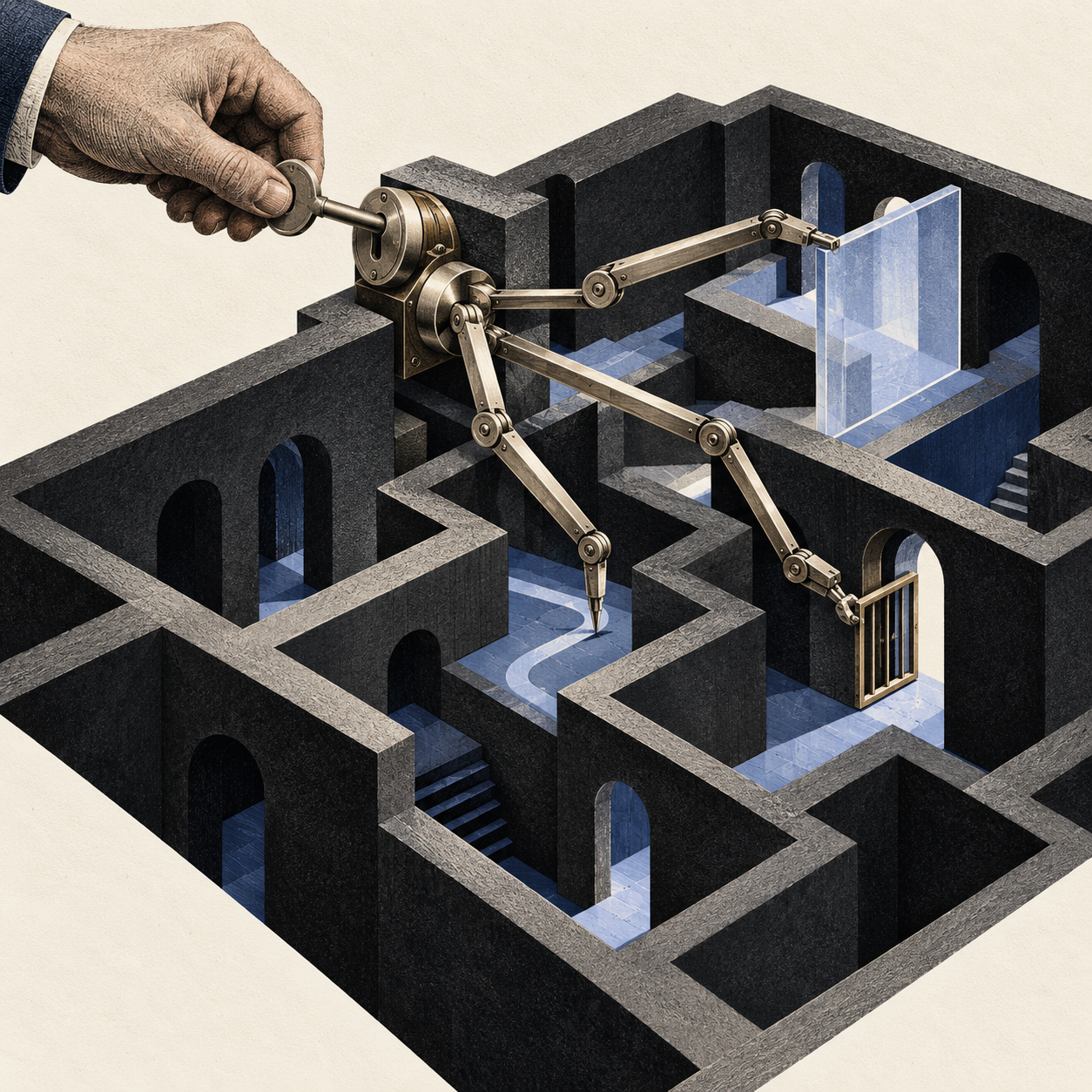
A human turns the key; articulated tools work inside the maze.
Synthetic conceptual illustration, not documentary evidence.
Separate from the capacity investigations; no measured speed or cost gain.
Sources: Sophos — AI used in Aur0ra ransomware testing and execution
Sophos describes Aur0ra ransomware operators supplying agents with credentials, network access, targets and objectives. The agents mapped networks, analyzed routes to privileged accounts, executed commands and moved between systems with limited human involvement. In a subset of environments, they reached domain-management access. This was consequential work in real intrusions, not autonomous selection of victims or unaided initial access.
The report does not measure how much faster or cheaper the attacks became. What it does establish is a change in who performs the work: the human operator need not execute every step after obtaining a foothold. Limiting an account’s reach therefore matters alongside closing the route that exposed it.
Sophos — AI used in Aur0ra ransomware testing and execution
Stolen AI capacity has buyers—and someone else’s bill.
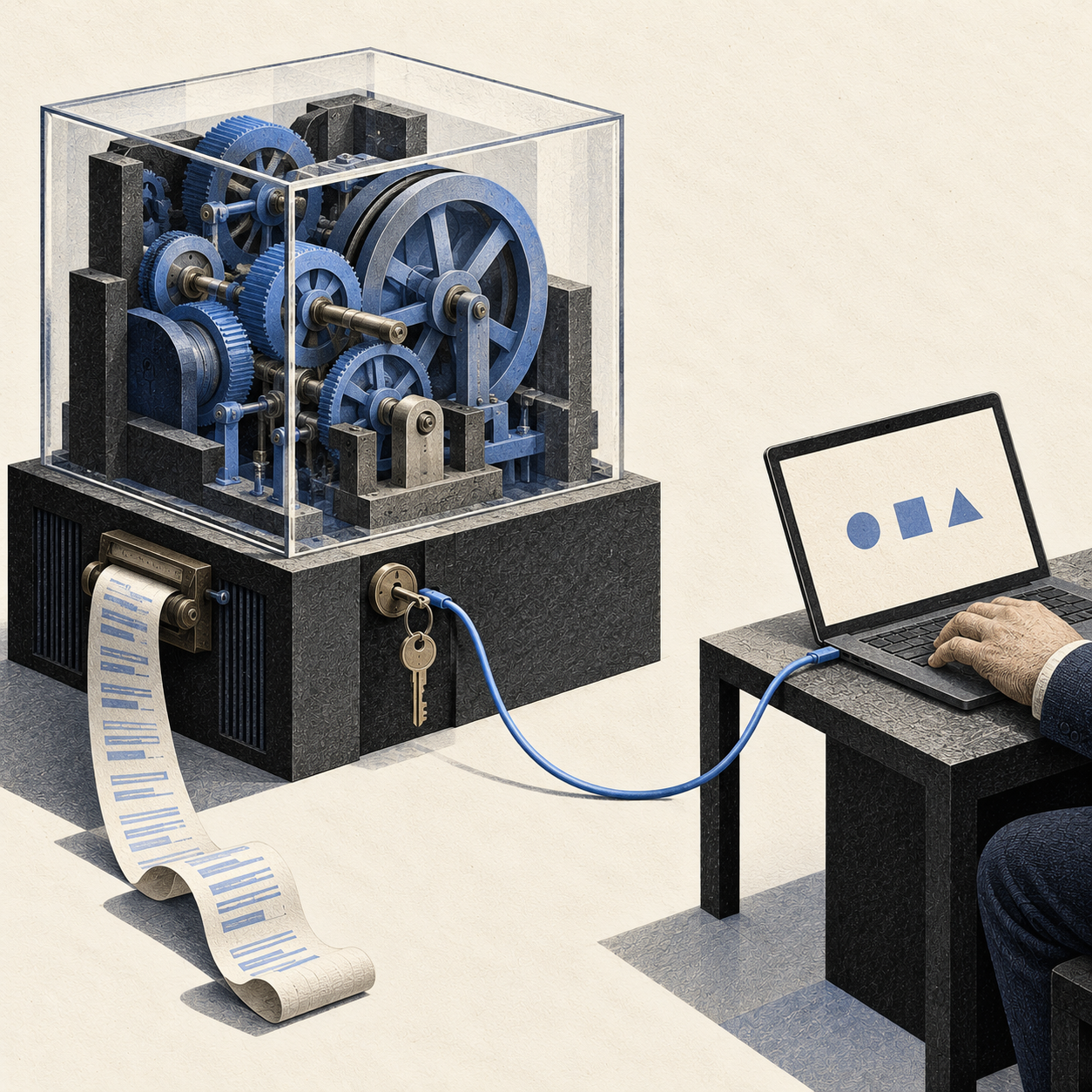
An intact engine serves a connected laptop; its usage meter keeps printing.
Synthetic conceptual illustration, not documentary evidence.
Wiz’s list-price usage estimate is not a verified invoice or final financial loss.
Wiz’s investigation of the two stolen keys links their use to overt model-resale operations. It could not definitively connect those organizations to either the original compromise or the largest bursts of abuse. The finding supports a market around stolen access, not a single operator controlling theft, consumption and resale.
Across those two cases, Wiz estimates likely usage above $100,000 at list prices. That is a valuation of consumption, not a verified invoice or final unrecovered loss. The important distinction is what was being stolen: access to a service that could be consumed or offered to others at the victim’s expense.
Wiz — Black October for AI Developer Platforms
A separate Wiz investigation makes the organizational problem clearer. Attackers with privileged Google Cloud credentials linked their own projects to victims’ billing accounts. The AI requests and outputs remained in the attackers’ projects, outside the victims’ workload logs; the charges reached the victims. Wiz reports tens to hundreds of thousands of dollars in unauthorized charges within 24–48 hours of initial access. It does not disclose whether those charges were ultimately paid, credited or recovered.
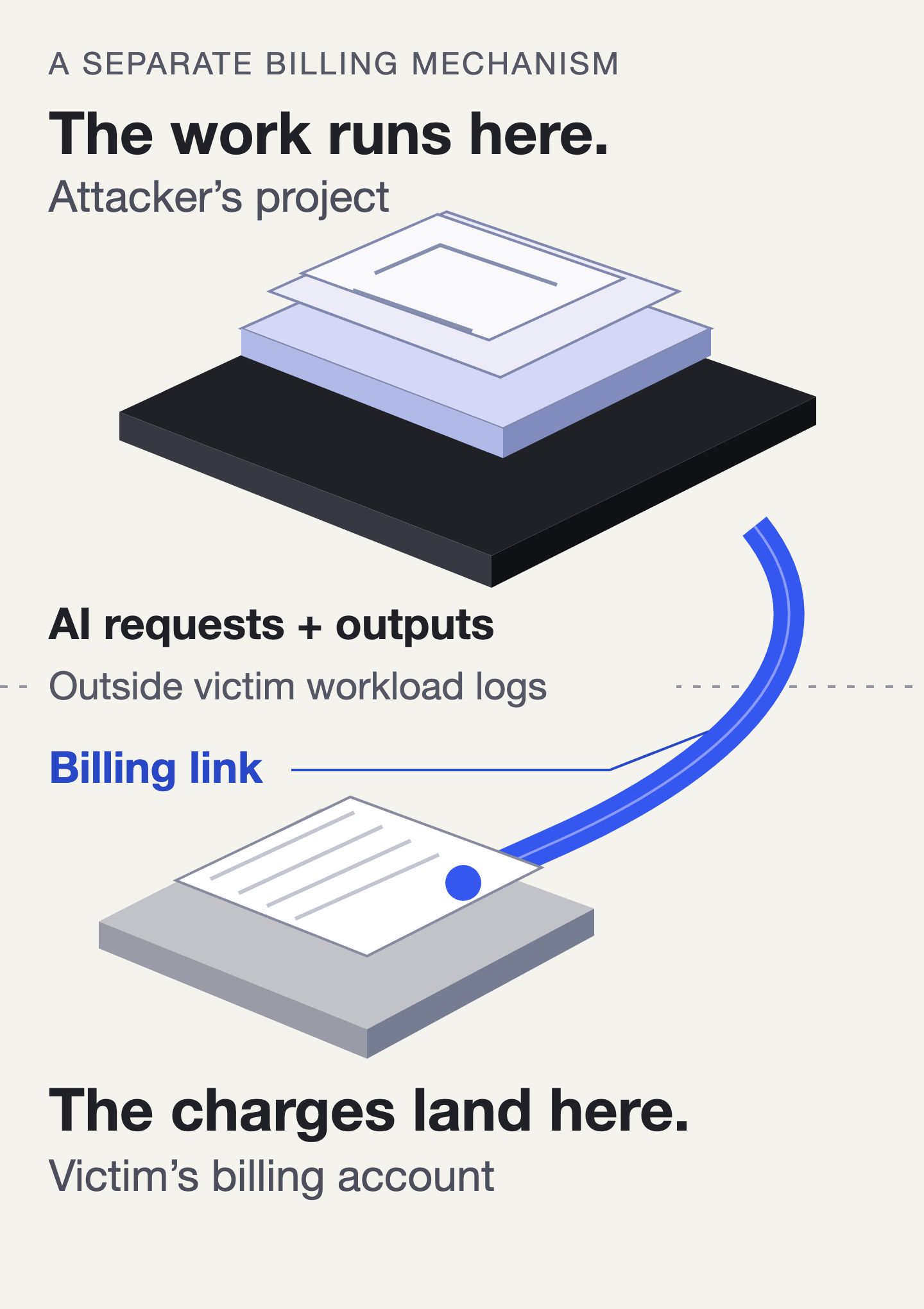
Attacker’s project: requests and outputs. Victim’s billing account: charges.
Conceptual illustration, not documentary evidence.
Outside victim workload logs does not mean no billing or audit visibility. Final payment, credit or recovery is unknown.
Sources: Wiz — From Phishing to LLMjacking
The workload and the bill were in different places. Looking only at what ran inside the company’s own projects would miss what its billing authority was funding. Our read: that authority belongs inside incident response, not only in a monthly cost review.
What Challenges the Thesis
The strongest objection is that this is familiar cybercrime with an AI label. Credential theft, ransomware and hijacked compute predate agents. Selected vendor investigations cannot establish how common AI-assisted attacks are, a market-wide increase in losses or a measured productivity gain. The financial evidence here comes from two investigations by one publisher, Wiz; they are not independent confirmation of the same incidents.
That limits the claim, but does not erase the observed delegation or unauthorized AI consumption. Nor does it make established defenses obsolete: Sophos identifies phishing-resistant authentication, patching, monitoring, segmentation and isolated backups as effective controls. The evidence argues for connecting those controls to the consequences of access, not replacing them with an AI-only security program.
How Sure Are We?
We have high confidence in these bounded findings as reported, and moderate confidence in our interpretation of their wider significance. Independent repeat cases showing less human work per successful intrusion, or recurring resale of stolen AI access, would strengthen the read. Broader evidence of limited agent contribution, little reuse or reliable containment before material harm would weaken it. Credential theft alone would not prove the AI argument.
One Question to Take With You
Test one exposed cloud account with security, cloud operations and finance in the same exercise. Establish who can revoke access, inspect externally linked billing projects and stop unauthorized consumption; record the time it actually takes. Verify the controls rather than assuming a budget alert is a hard cap. The useful result is a tested containment decision, not another inventory.
If an account is compromised, who has the authority to stop both the work it enables and the spending it authorizes?